Aerospace Systems — Designed for Critical Missions
THE INTERCEPTOR FOR MODERN THREATS. Built to Perform When It Matters.
Autonomous counter-UAS interceptors that detect, track, and neutralize hostile aerial threats in a
fraction of the time and at a fraction of the cost of legacy air-defense systems.
SKAR Aerospace is a vertically integrated aerospace company that develops complete flight systems. We own the full chain.
Our systems are purpose-built for high-consequence missions where reliability is non-negotiable. Every design is simulation-validated, every component is traceable, and every vehicle is integrated under one roof.
We exist to deliver assured aerospace capability — rapidly, domestically, and without compromise.
Vertical Integration
Every subsystem designed, built, and tested in-house. No critical dependency on third parties.
Mission Assurance
Simulation-first development with full traceability from requirements to flight hardware.
Rapid Delivery
Compressed development timelines through concurrent engineering and agile hardware iteration.
Operational Readiness
Systems designed for field deployment — ruggedized, autonomous, and ready for austere conditions.
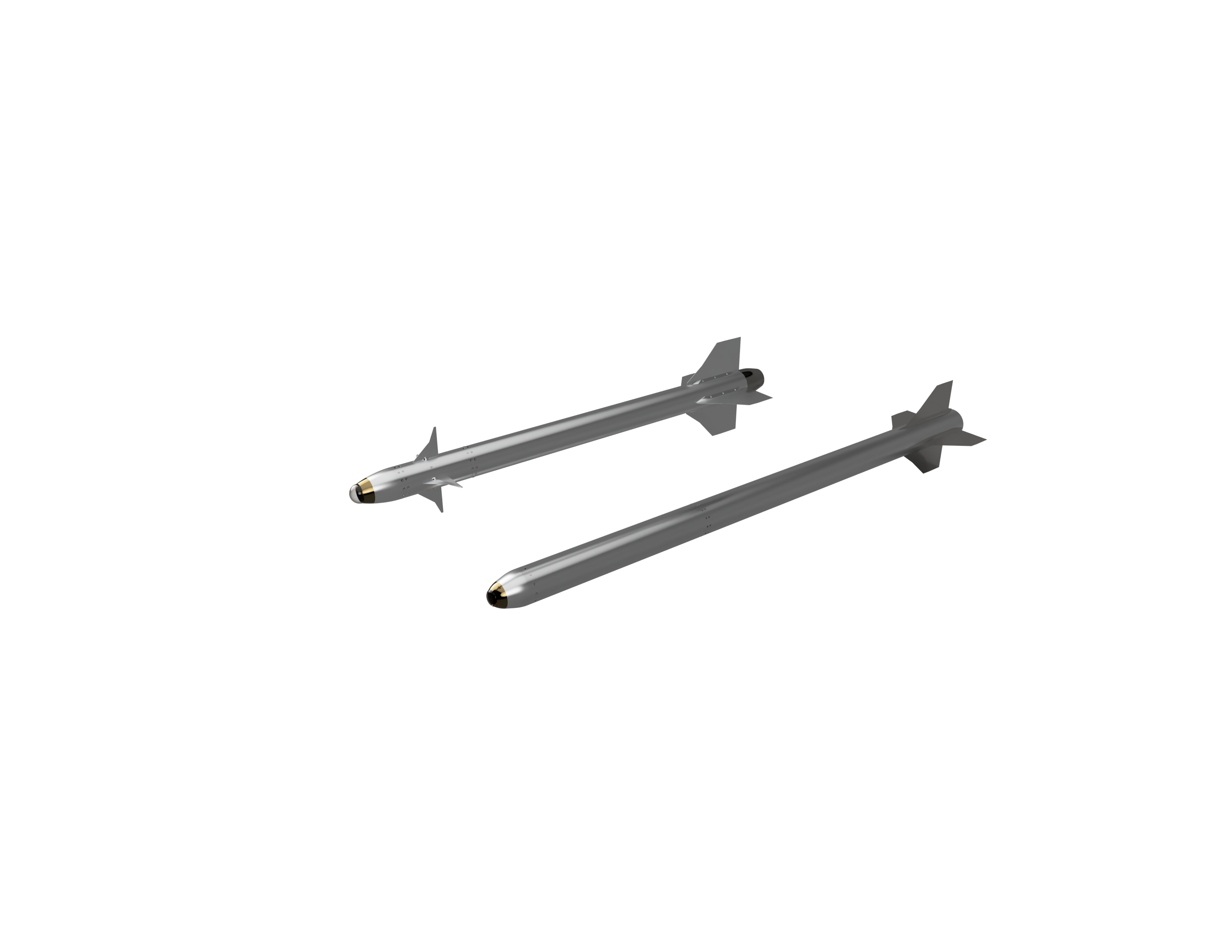
Product Family
Two Interceptors. One Mobile Platform.
Purpose-built effectors for the full spectrum of air threats — from small commercial drones to cruise missiles.
vSHORAD · Point Defense
SKAR-V Block I
Kills UAS at 0.5 – 6 km range
Minimum Range
500 m
Maximum Range
6,000 m
Altitude
5,000 m
Max Speed
Supersonic
Guidance
INS + Active Radar Homing
Countermeasures
Resistant to Countermeasures
Operation Mode
Lock-On Before Launch [Fire-And-Forget]/ Radar Homing
Targets
UAVs, loitering munitions, cruise missiles
SHORAD · Area Defense
SKAR-S Block I
Kills UAS + cruise missiles at 1 – 15 km range
Minimum Range
1000 m
Maximum Range
15,000 m
Altitude
8,000 m
Max Speed
Supersonic
Guidance
INS + Active Radar Homing
Countermeasures
Resistant to Countermeasures
Operation Mode
Radar Homing
Targets
UAVs, loitering munitions, cruise missiles
System Architecture
Full Engagement Chain. All Subsystems. Any Platform.
From initial detection through terminal phase — every subsystem is designed, built, and integrated in-house. Autonomous operation. Closed-loop performance.
< 16 SECONDS
Detect
0 s
Targets inbound. Radar conducts autonomous search and early warning.
Fire authorized automatically. Effector selected, launch parameters computed.
Engage
2.75 s
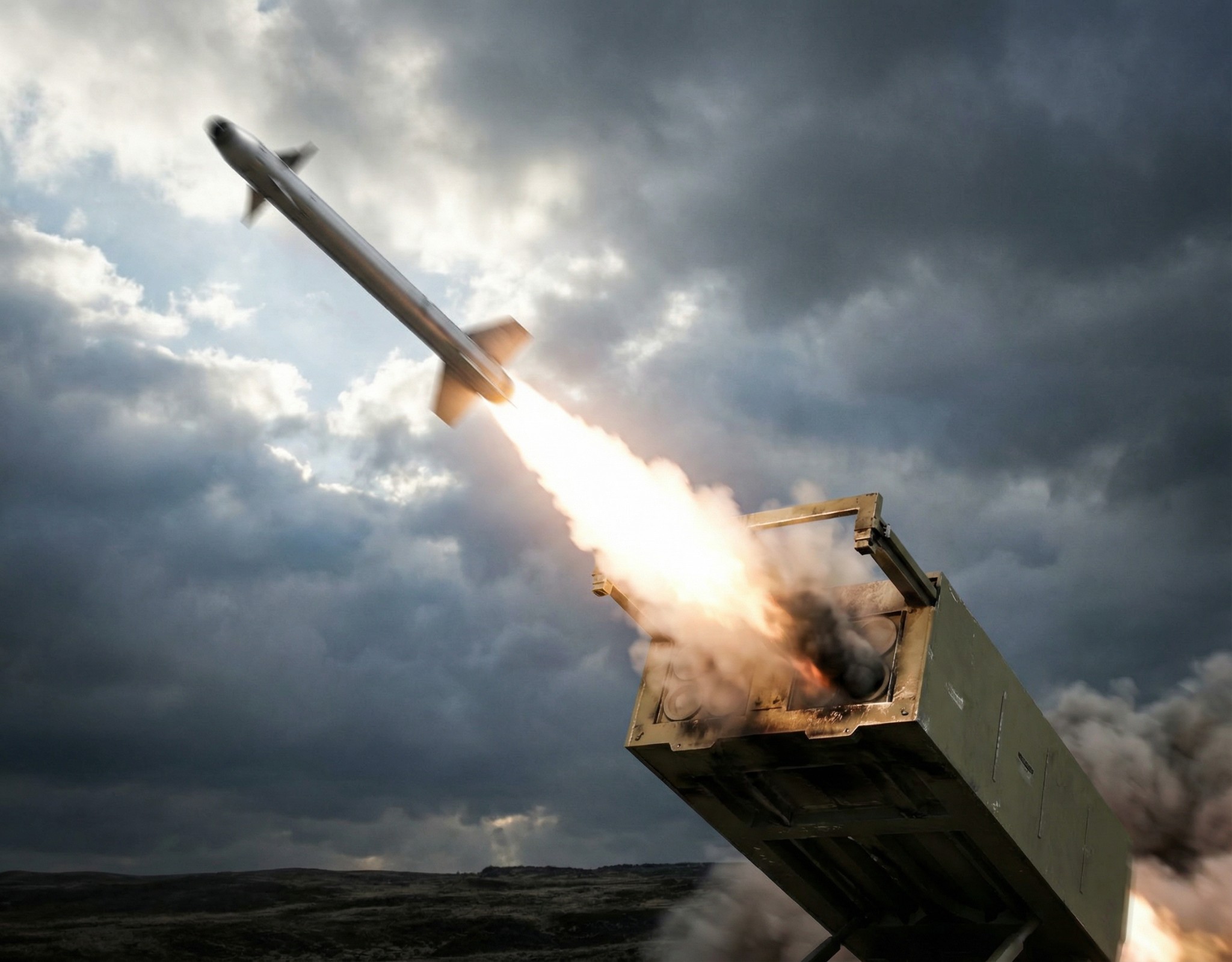
Interceptor launches. Solid propulsion.
Guide
12 s
Onboard GNC with mid-course update and terminal homing to target.
Intercept
<16 s
HE warhead / kinetic hit destruction. BDA confirms neutralization or triggers re-engagement.
Detect & Track
Surveillance & Sensor Fusion
Multi-band sensor suite with 360° coverage. Autonomous search, multi-object tracking, automatic classification and IFF. Low false-alarm rates in contested electromagnetic environments.
Command & Engage
Fire Control & Propulsion
Integrated command layer with real-time fire solutions and multi-effector selection. High-performance solid propulsion with rapid ignition and platform-agnostic launch configurations.
Guide & Kill
GNC & Terminal Effect
Agile flight control with mid-course update and terminal guidance algorithms. Proximity or direct-hit mechanisms with post-engagement damage assessment and re-engagement loop.
Distributed Architecture
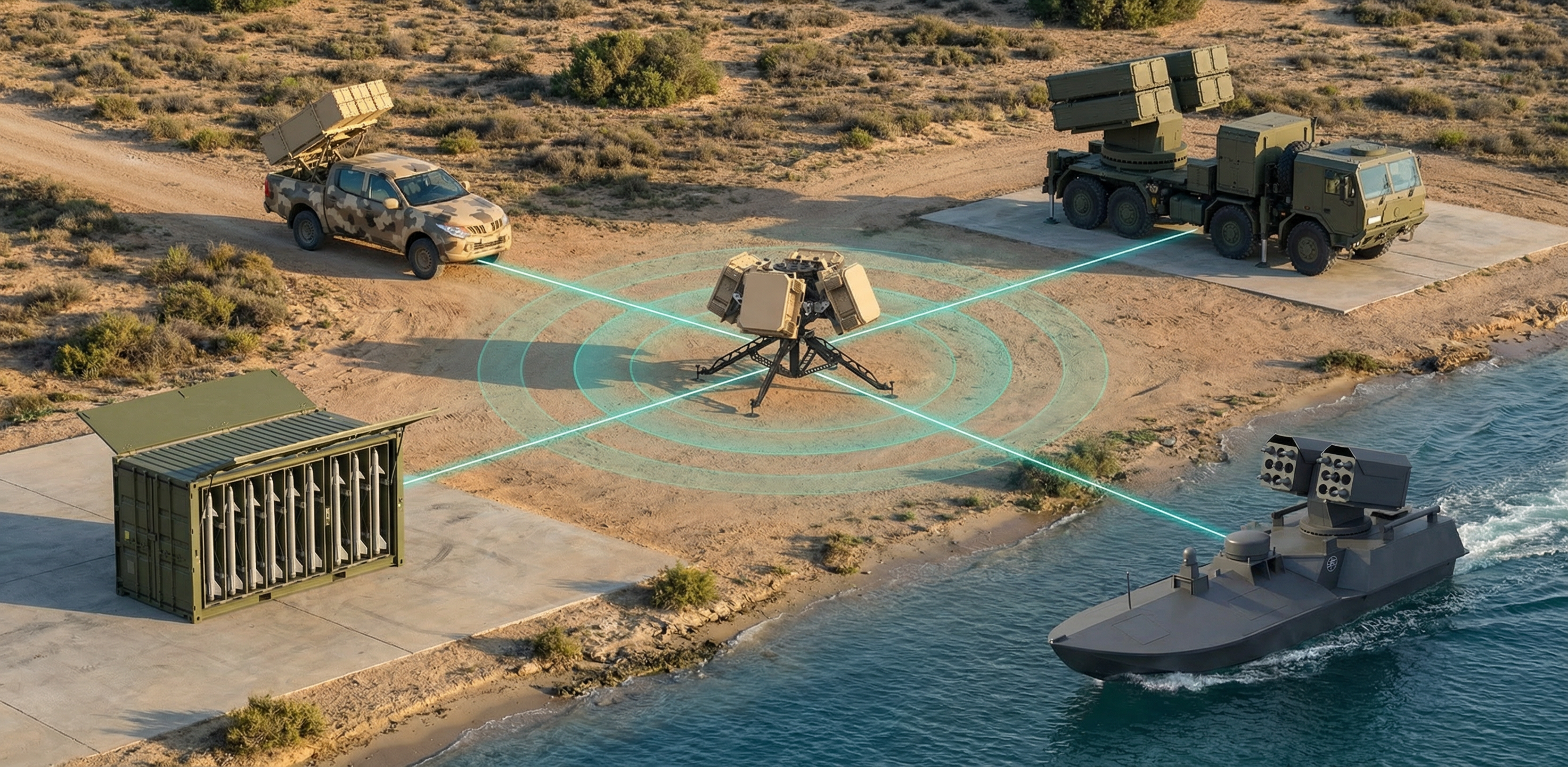
One Radar. Multiple Launchers. Any Platform.
A single sensor node commands the entire engagement — decoupling detection from launch and enabling truly distributed air defense across land, sea, and fixed sites.
The SKAR system is built around a centralized radar and command unit that connects to multiple independent launcher modules. Each launcher operates as a networked effector — receiving targeting data, managing its own readiness, and executing fire commands autonomously.
This architecture means a single radar investment can service an entire area defense with launchers distributed across different platforms and positions. Launchers can be added, relocated, or swapped without reconfiguring the sensor layer.
The result is a scalable, resilient defense topology — where losing a launcher doesn't mean losing coverage, and adding capacity doesn't require additional radars.
Radar / C2
Central sensor and command
Launchers
Independent effector modules
Platforms
Mobile, naval, stationary
1 Radar — N Launchers — Any Platform Mix
Platform Integration
Deployment Architecture.
System designed for integration across ground, naval, and fixed-site launch environments. Platform-agnostic by design.
01 — Ground-Based
Mobile / Semi-Mobile
High-Mobility Vehicle Integration
Designed for installation on mobile ground platforms. Supports operation while stationary or in motion, depending on platform class and mission profile.
Designed for
High-mobility military trucks
Light tactical vehicles
Mobile ground platforms
Stationary and on-the-move launch capability depending on configuration.
02 — Naval
Ship / Unmanned Surface Platform
Maritime Launch Integration
Optimized for maritime environments, extended detection range, and naval air defense scenarios. Compatible with manned and unmanned surface platforms.
Designed for
Naval vessels
Unmanned surface vehicles (USVs)
Sea drone platforms
Stabilized for sea state operations with shipboard fire control integration.
03 — Fixed / Universal
Containerized / Stationary
Relocatable Infrastructure Defense
Containerized format enables both stationary installation and rapid relocatable deployment. Optimized for continuous operation and critical asset protection.
Designed for
High-priority military infrastructure
Critical civil infrastructure protection
24/7 continuous operation
Rapid redeployment when required
Standard ISO container format for airlift, sealift, and road transport compatibility.
Key Parameters
Engineered Margins.
0
Peak Velocity
Performance
0
Rated Load
Lateral acceleration
0
Engagement Range
Mission envelope
0
In-House
Vertical integration
Development Process
Concept to Flight Readiness.
A disciplined, simulation-first process. We validate digitally, then build to print.
PHASE 01
Requirements & Architecture
Mission requirements capture, system architecture trade studies, interface definitions, and preliminary design review.
PHASE 02
Simulation & Analysis
High-fidelity CFD, structural FEA, trajectory modeling, internal ballistics, and thermal analysis. Every design validated before fabrication.
PHASE 03
Build & Integration
Composite layup, precision machining, electronics assembly, and full vehicle integration with hardware-in-the-loop verification.
PHASE 04
Test & Qualify
Static fire, vibration testing, systems validation, flight readiness review, and launch operations with live telemetry monitoring.
Engineering Stack
Tools & Methods.
Industrial-grade analysis tools, in-house simulation pipelines, and full-stack embedded development — backed by real credentials.
01
Computational Fluid Dynamics
RANS and transient external aerodynamics simulations, shock interaction modeling, and angle-of-attack characterization across subsonic through supersonic regimes.
02
Flight Dynamics & Trajectory
Full 6-DOF simulation with atmospheric models, motor thrust curves, aerodynamic databases, wind perturbation, and Monte Carlo dispersion for mission planning and range safety.
03
Structural & Thermal FEA
Composite structures, motor casings, and joints analyzed under combined mechanical, thermal, and vibroacoustic loading with full safety margin verification.
04
Guidance, Navigation & Control
Custom flight software with sensor fusion, state estimation, guidance algorithms, and encrypted telemetry protocols. Developed and verified in hardware-in-the-loop environments.
14
Peer-Reviewed Publications
Scopus-indexed research across propulsion, guidance algorithms, and composite structures.
<1 yr
Founding to Qualified Hardware
Full development cycle — from clean-sheet design through qualification testing.
8+ yr
Average Engineering Experience
International aerospace engineering team. Deep domain expertise in flight systems, propulsion, and embedded avionics.
EU
European Manufacturing & Integration
EU-based production facilities. NATO-aligned procurement path with European supply chain traceability.